Our feet carry us through life, step after step, often without much thought or care. Yet these foundations of movement hold a surprising amount of influence over our health and well-being. Reflexology, the practice of applying targeted pressure to specific points in the feet, shows us just how connected our bodies really are. This technique has been practiced for centuries, and today it remains one of the most grounding, restorative forms of bodywork available.
At Unwind Massage and Bodywork, I use reflexology not just to refresh tired feet, but to create whole-body balance. Sessions like Sole Revival Reflexology combine targeted reflexology with deep calf massage and guided stretching, creating a treatment that relieves tension, restores circulation, and renews the body from the ground up. Let’s take a closer look at why this ancient practice continues to be such a powerful tool for modern wellness.
The Principles of Reflexology
Reflexology is based on the concept that certain points on the feet correspond to specific organs and systems in the body. By applying pressure to these points, therapists can stimulate circulation, release blockages, and encourage the body’s natural ability to heal and regulate itself.
For example, points on the arch of the foot are thought to connect to the spine, while points near the ball of the foot may correspond to the lungs and chest. When these areas are worked with focused pressure, many clients report not just relief in their feet, but also improvements in energy, digestion, or overall stress levels. Whether you view it through the lens of energy pathways or through the modern understanding of nerve endings and circulation, the result is the same: better balance throughout the body.
Why the Feet Matter So Much
Our feet are often overlooked until something goes wrong. They support the weight of the entire body, absorb shock with every step, and contain thousands of nerve endings. When the feet are tense, sore, or misaligned, it can affect everything from posture to mobility.
By addressing tension and restriction in the feet and calves, reflexology provides relief that radiates upward. Clients often describe feeling lighter, more balanced, and more energized after a session. It’s a reminder that wellness doesn’t always begin with the big muscle groups—it can start from the ground up.
The Role of Calf Massage and Stretching
While reflexology is at the heart of the treatment, pairing it with deep calf massage and guided stretching amplifies the results. Tight calves are a common source of discomfort, often contributing to knee pain, hip imbalances, and even lower back tension. Working deeply into these muscles improves circulation, restores mobility, and takes pressure off the joints above.
Gentle stretches of the ankles, arches, and calves complete the experience by restoring flexibility and easing stiffness. This combination not only makes your legs and feet feel renewed, but also supports better posture and smoother movement in your daily life.
Who Benefits Most from Reflexology
The truth is, reflexology can benefit just about anyone. It is especially valuable for:
- Athletes and runners, who put constant stress on their feet and lower legs.
- Professionals who stand for long hours, such as teachers, healthcare workers, or service staff.
- Desk workers, who may not realize that poor circulation and inactivity can create tension in the lower legs.
- Anyone under stress, since reflexology helps calm the nervous system and restore balance.
Because it’s a fully clothed treatment focused on the feet and calves, reflexology is also an excellent option for clients who prefer not to undress for a session but still want powerful therapeutic benefits.
The Benefits Beyond the Feet
While reflexology directly relieves soreness and fatigue in the feet, the ripple effect is what makes it so powerful. Clients often notice:
- Improved circulation throughout the body.
- Reduced stress levels and greater mental calm.
- Relief from headaches, back pain, or tension that seemed unrelated to the feet.
- A sense of grounding—being more centered and connected after the session.
- These whole-body benefits make reflexology an excellent complement to other therapeutic services like deep tissue massage or assisted stretching.
What to Expect in a Session
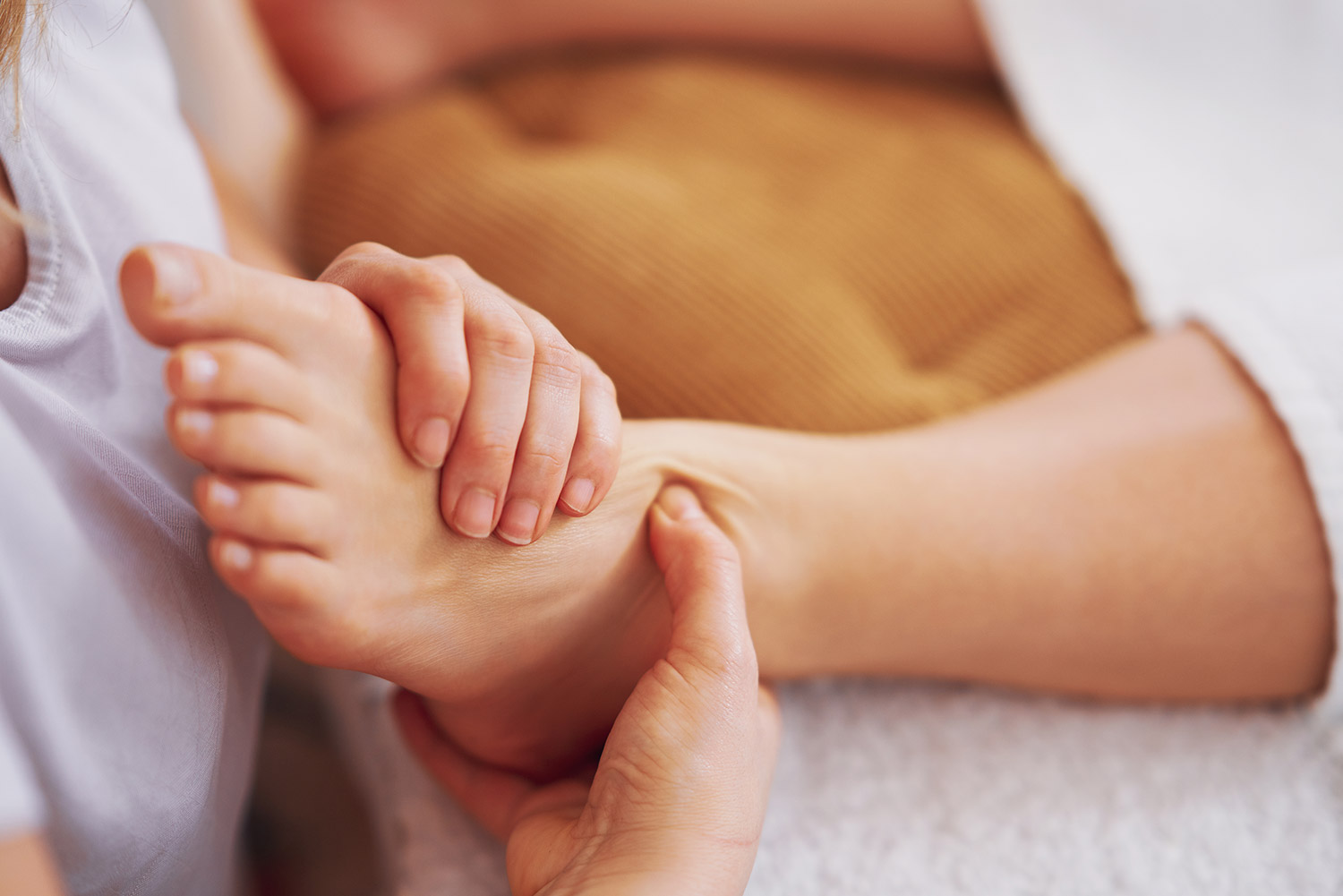
During a reflexology session, you’ll remain comfortably clothed and reclined. The treatment begins with soothing warm-up techniques to relax the feet, followed by targeted reflexology pressure applied to specific points. From there, deep calf massage and stretching are introduced to release tight muscles and improve circulation. The session is rhythmic, grounding, and deeply restorative—clients often feel both relaxed and energized by the end.
After the Session
It’s common to feel lighter on your feet and more relaxed throughout the body after reflexology. Some clients notice immediate improvements in energy or clarity, while others simply enjoy the calm, renewed state it provides. Mild tenderness in the calves or feet may occur if significant tightness was released, but this typically fades quickly. Drinking water and gentle movement after your session will help extend the benefits.
Wellness from the Ground Up
Reflexology reminds us that the foundation of wellness starts with the feet. By releasing tension, restoring circulation, and reconnecting the body’s natural balance, this practice delivers results that go far beyond relaxation. At Unwind Massage and Bodywork, Sole Revival Reflexology is designed to renew your body from the ground up—helping you move better, feel better, and live with greater ease.
Ready to experience the benefits of reflexology? Book your Sole Revival Reflexology session today and step into balance, comfort, and renewal.